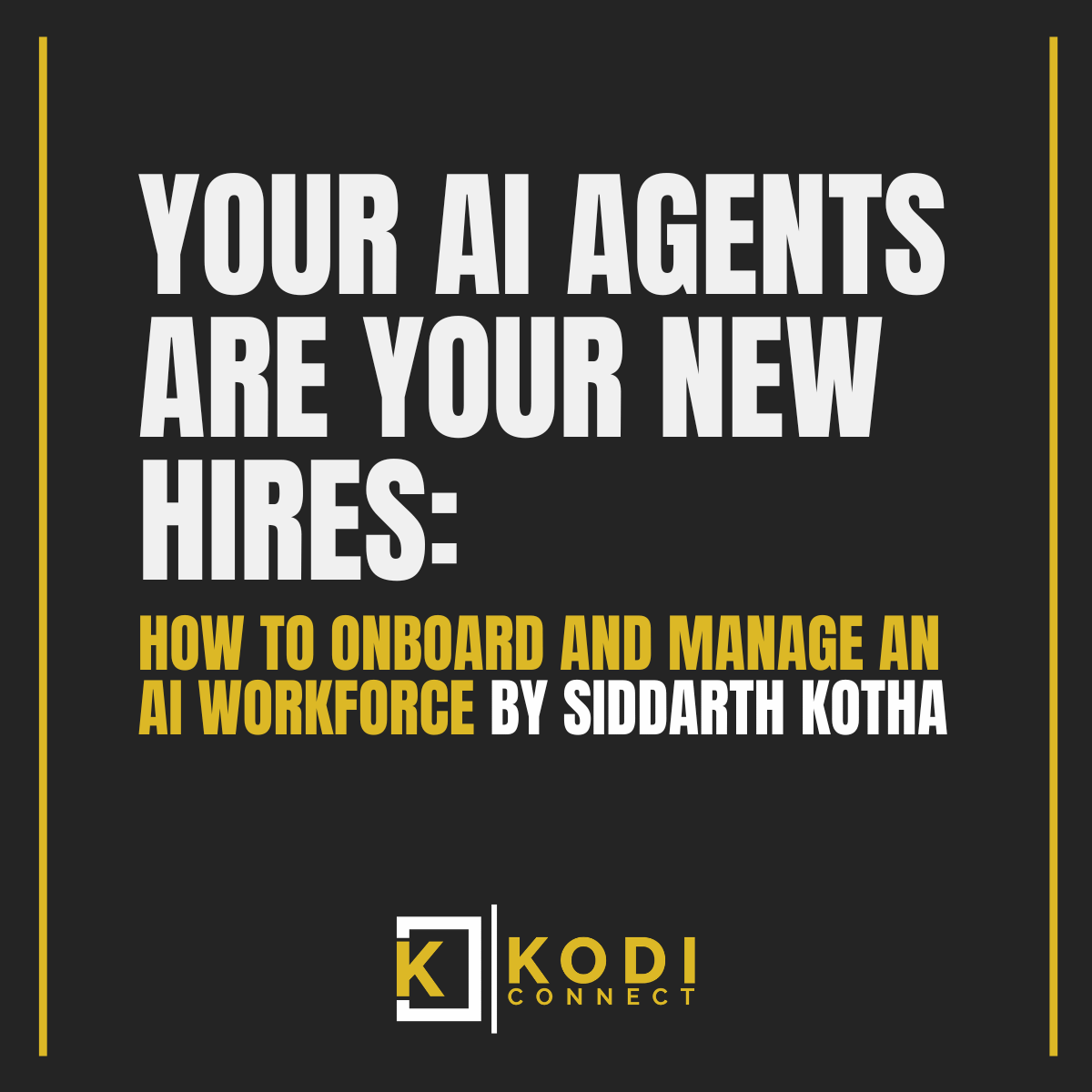
Treat Your AI Agents Like New Hires
By Siddarth Kotha
Most companies have spent years getting identity right for people. Every employee gets an account on day one, access that fits their job, and a manager who answers for it. When they change roles, their access changes. When they leave, it is turned off.
AI agents are now doing real work inside those same companies. They read email, open tickets, query databases, and call other systems. Many of them do it with far less oversight than we would ever accept for a new hire. Ask most security teams how many agents they have, who owns each one, and what each one can reach, and you will usually get a long pause.
The good news is that we already know how to fix this. We just need to give agents the same identity basics we give people.
Why agents raise the stakes:
An agent can act thousands of times an hour, and it does what its instructions and inputs tell it to do. That includes instructions hidden in an email, a document, or a web page it was asked to read. A person might stop and ask whether a request makes sense. An agent usually will not.
That is why identity matters so much here. When an agent is tricked or simply gets something wrong, the access it holds decides how much damage it can do.
Five basics that carry over from people to agents:
1. Give every agent its own identity. No shared accounts and no borrowed human logins. When an agent acts, the logs should show that agent, not a person or a generic service account.
2. Name a human owner. Every agent needs one person who answers for what it does, the same way a manager answers for an employee's access. An agent with no owner should not be running.
3. Grant only what the task needs. Scope access to the job in front of it, not to everything it might use someday. Prefer short-lived credentials that expire on their own over keys that sit in a config file for years.
4. Keep a person in the loop for high-impact actions. Let agents draft, sort, and recommend freely. Moving money, changing access, deleting data, or touching production should still need a human yes.
5. Watch it, review it, and know how to turn it off. Log what each agent does, review its access on a schedule, and have a tested way to shut it down quickly. When an agent is no longer needed, retire it, just as you would close an account when someone leaves.
Where to start:
You do not need a brand new program to begin. Start with an inventory and find the agents already running, including the ones business teams built on their own. Then put each one through the same joiner, mover, and leaver process you already use for people. Give it an identity, assign an owner, review what it can reach, and set a date to check it again.
AI will keep moving faster than most policies can. Identity is the one control that goes wherever the agent goes, which makes it the right place to start.
Join the conversation. Connect with the community. Help shape what's next.
Siddarth Kotha is a member of the Kodi Connect Advisory Board and leads identity and access management for a global manufacturer.
The conversations shaping the future of AI don't stop here. At Kodi Connect, we bring senior technology, cybersecurity, data, and AI leaders together to exchange ideas, challenge perspectives, and explore what's next. Join us at an upcoming Kodi Connect executive networking event to take part in similar conversations with fellow industry leaders. Our Advisory Board is an extension of our in-person networking community, bringing together experienced leaders like Siddarth to share insights, influence important conversations, and keep the exchange of ideas going long after the event ends.
- This is some text inside of a div block.
Engaging Discussions & Meetings: Take part in multiple small-group discussions, each focused on a specific theme or industry challenge. These sessions are moderated to promote active participation and open dialogue, offering you the chance to both learn and share your own insights. The intimate format ensures that conversations can be tailored to your specific interests, maximizing the relevance and value of each discussion.
Continued Networking Opportunities: Throughout the event, there will be informal moments to reconnect with fellow attendees. These are ideal times to exchange contact details, revisit important discussions, or explore new connections in a more relaxed, open setting.
Private Dinner: A select group of senior executives will be invited to an exclusive dinner, offering a private, intimate environment to build deeper connections and explore collaboration opportunities. This dining experience provides a more personal space to continue conversations over a three-course meal.

Stay Ahead of Industry Trends: Learn about the latest industry developments, technologies, and strategies that are shaping the future of Cybersecurity leadership.
Learn from Peer Successes and Challenges: Benefit from the experiences of your peers by learning from both their successes and the challenges they’ve overcome, informing your own strategies.
Collaborate on Industry Initiatives: Take part in conversations that aim to drive progress in the Cybersecurity sector, contributing to shared solutions for common challenges.
Support Your Local Cybersecurity Community: Be part of Kodi Connect’s mission to bring the local Cybersecurity leadership community together, fostering collaboration and growth in your region.
Mentor and Be Mentored: Share your expertise while learning from others in a setting designed for mutual growth and support within the Cybersecurity community.
Discover Local Solutions: Engage with local vendors and solution providers who understand the unique needs and challenges of your region, and explore potential collaborations.
Leave with Fresh Perspectives: Gain new insights and potential solutions that can address your most pressing Cybersecurity challenges, bringing fresh ideas back to your organization.

Senior-Level Decision Makers: Our events are tailored for those currently holding Chief, VP, Director, or Senior positions. Attendees should have the appropriate background to contribute meaningfully to the discussion and share insights with their peers.
End-User Organizations Only: We invite executives from end-user companies, typically within the Fortune 1000, that do not provide solutions in the subject field. This helps ensure that the event remains focused on real-world challenges and solutions, rather than product promotion.
Industry Relevance: Attendees should work in industries that align with the event’s topics, ensuring that discussions are relevant to their specific business challenges and areas of expertise.
Active Participation: We encourage attendees who are willing to engage, share experiences, and participate fully in the roundtable discussions. Our format thrives on interaction, and active involvement ensures a rich and productive experience for all.
Cybersecurity leaders, we encourage you to register early. Simply click the link at the top of the page to complete the registration form.
If you have any questions or need assistance at any stage of the process, our dedicated team is here to help. Don’t hesitate to reach out — we’re committed to making your experience seamless from start to finish: